From fragmented luxury platforms to a unified global marketplace: Designing AltaPort’s cross-border fashion ecosystem

Client: Concept Product / Independent UX Case Study
Timeline: July, 2025 - September, 2025

AltaPort transforms luxury retail and resale into a verified, cross-border marketplace — reducing friction, increasing trust, and empowering emerging global sellers.

UX Design
UI Design
UX Research
Design Strategy
Prototyping
Marketplace Systems

At a Glance

Luxury fashion was fragmented across retail and resale platforms, leaving shoppers juggling authenticity concerns, hidden fees, and inconsistent global shipping experiences.

Sellers especially emerging designers and non-Western boutiques  struggled to reach international buyers without sacrificing trust or visibility.

We set out to architect a unified, trust-first marketplace blending retail and resale into a seamless cross-border ecosystem that makes discovery effortless, authentication transparent, and global commerce frictionless.

The friction problem

In the world of luxury fashion, trust is the currency.

Retail and resale platforms operated in silos, authentication standards varied, and cross-border purchases came with hidden costs and uncertainty.

For high-value purchases, friction doesn’t just slow conversion — it signals risk.We identified four critical blockers:

1. Trust fragmentation: Inconsistent authentication processes and unclear seller credibility.
2. Price opacity: Hidden international fees, duties, and unpredictable shipping costs.
3. Discovery overload: Too many platforms, poor filtering, and limited personalization.
4. Cross-border friction: Complicated returns, long delivery times, and lack of localized support.

Part 1. Exploring the User's Needs

Overview

Participants: 6 fashion shoppers (Gen Z to millennial)

Mix: resale power-users, indie fashion buyers, trend-driven shoppers, and traditional retail consumers

Method: Semi-structured interviews (30–45 mins each)

User Interview Highlights

- Trust and authentication determine purchase decisions
- Hidden fees and unclear payouts reduce confidence
- Resale sellers need better operational tools
- Gen Z prefers social discovery; traditional users prefer clean UX
- Customization drives engagement but requires strong quality control
- Transparency directly correlates with willingness to transact
To synthesize insights from the interviews, I created an affinity map to uncover shared patterns in user needs, frustrations, and motivations.

So do Apps that Address users need already exist in the Market?

To understand the e-commerce luxury App better, I anayized 4 major competitors Farfetch, SSENSE, The RealReal and GOAT

Most competitors offer luxury or resale shopping but lack a unified, user-centered experience. AltaPort will combines both in one platform with verified listings, personalized curation, and transparent shipping.

Time for Persona development

Visualise the emotional journey :

I mapped the full shopping journey to see how users felt at different moments, not just what they did. Discovery felt exciting at first, but confidence dropped quickly when users questioned authenticity, pricing, or cross-border details. Seeing these emotional shifts made it clear where hesitation was happening and where trust needed to be more visible in the experience.

User empathy

After I had a better understanding of my users and their needs, I designated personas types to guide design decision. Our persona hypothesis consisted of 2 archetypes which I made sure I keep checking in them at every milestone. I also identified two use case scenarios that strongly resonate with my personas.
User Case 1:

Highlights a buyer’s journey from discovering curated resale pieces to completing a confident purchase. It focuses on building trust through seller verification, transparent pricing, and a streamlined checkout experience.
User Case 2:

Focuses on a seller managing designer listings within a trusted resale ecosystem. This journey emphasizes clear payout tracking, buyer communication, and intuitive dashboard tools that make selling efficient and reliable.

Part 2. Map the User Journey

The AltaPort sitemap shows how everything connects in a really clear and structured way. From the homepage, users can easily move into four main areas: Shop, Customize, Sell (Seller Hub), and the Authentication Center.

It separates buyer, seller, and verification flows so each experience feels focused, but they’re still connected within one system. Overall, the structure makes navigation more intuitive, reduces confusion, and supports AltaPort’s goal of combining retail, resale, and authentication into one seamless platform.
After establishing the sitemap, I mapped detailed user flows to define how key features translate into real interactions. From these, I prioritized 4 users flows that addressed friction in decision-making, cart management, and checkout completion. This 4 flows became the foundation for prototype testing and validation.
I used Crazy 8s to rapidly generate and refine ideas from research, then grouped the sketches by theme to identify key concepts
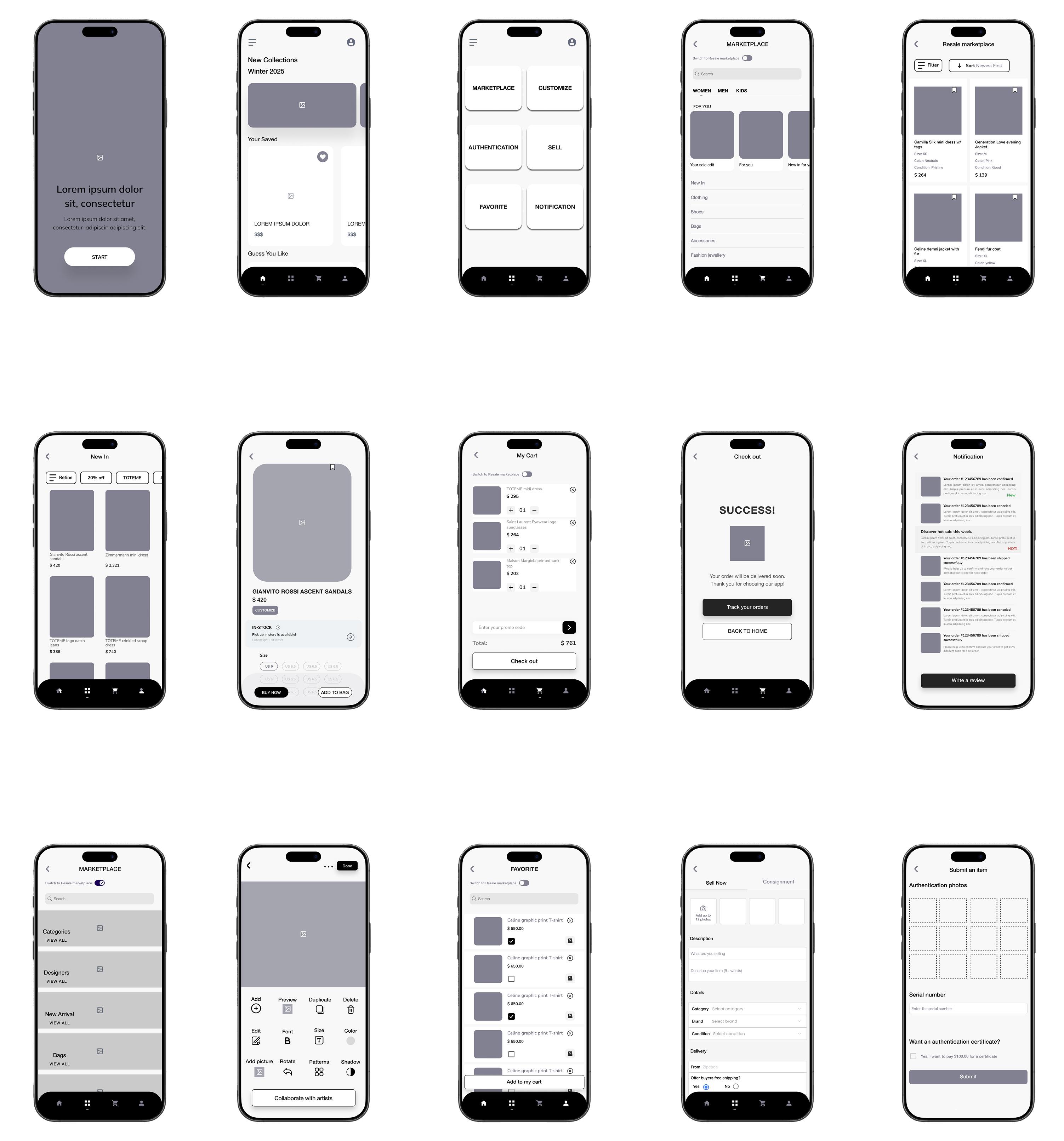
After completing the initial sketches, I translated them into low-fidelity wireframes to define AltaPort’s core structure. At this stage, the focus was on layout hierarchy, key decision points, and flow clarity rather than visual styling. These wireframes validated how users navigate from curated discovery to product detail, comparison, cart refinement, and a streamlined luxury checkout experience.

Part 3. Building the brand

Logo Design

First of all, I’ve explored potential naming solutions and marks for my logo. Eventually, I’ve decided to go for the "AltaPort", blends two meaningful ideas that reflect the brand’s vision. “Alta” comes from the Latin root for “high” or “elevated,” symbolizing premium quality, elevated taste, and a more curated shopping experience. “Port”evokes a global hub, a place where people and goods from around the world connect, arrive, and exchange.

Together, AltaPort suggests a high-end, globally connected platform where fashion flows in from rare vintage finds and international designer drops to one-of-a-kind custom pieces.
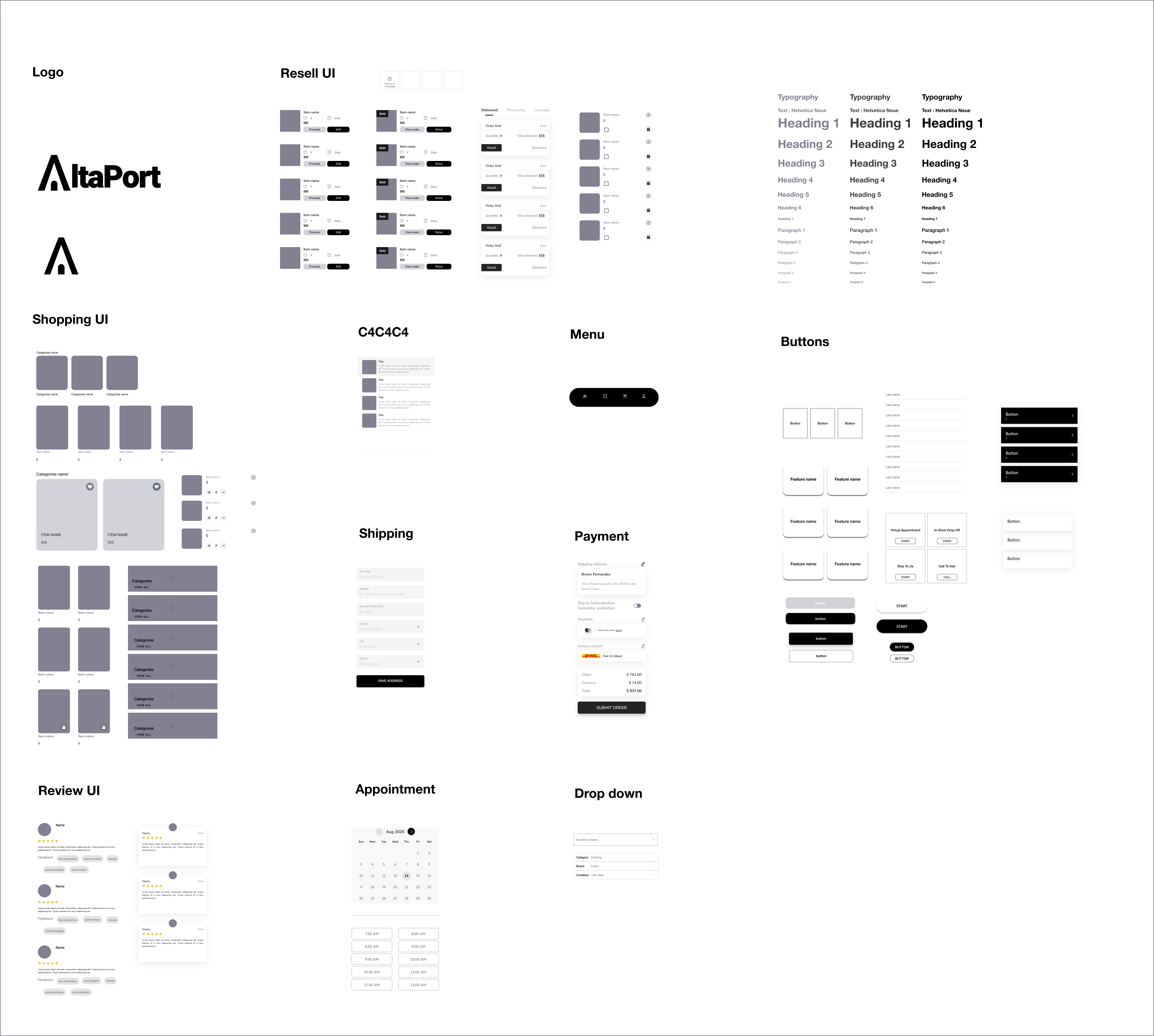
AltaPort uses a muted neutral palette to reflect calm, confident luxury. Soft greys create space and let products stand out, while deeper tones reinforce trust during high-value decision moments. The restrained color system keeps the experience refined, minimal, and editorial.
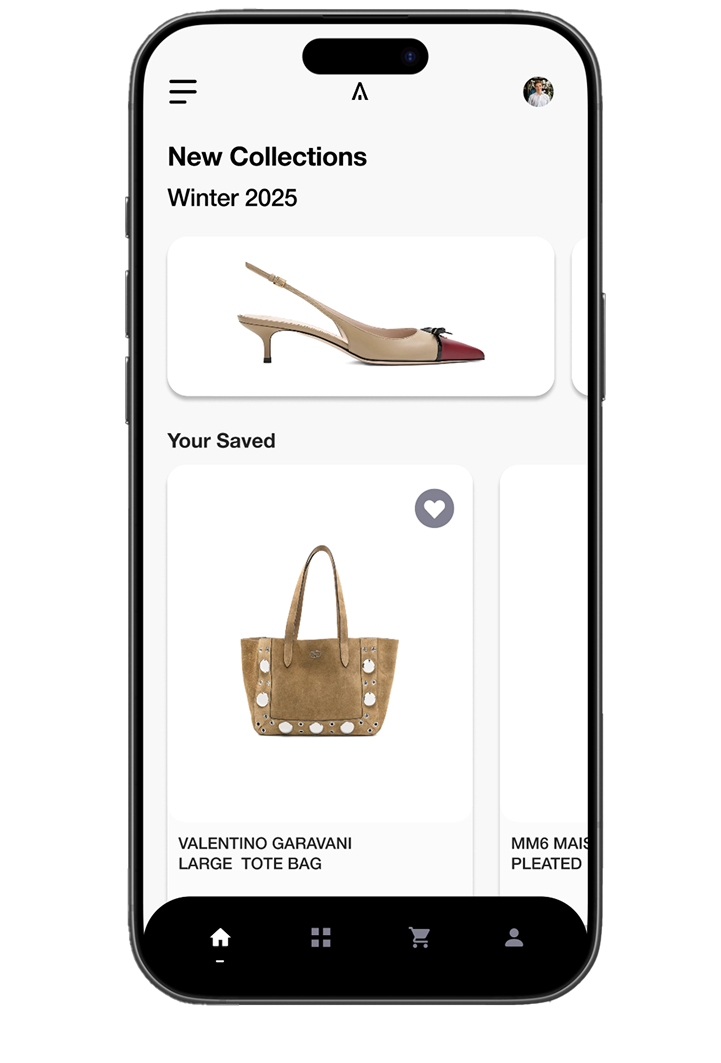
After the logo design, I created a colour palette and decided the  choice for typography has fallen on Helvetica NeueWith those elements added to my low fidelity wireframes, I made my way into high-fidelity wireframes.

Part 4. Prototyping & Testing

Structuring the AltaPort Experience Through Mental Models

AltaPort was structured around how people make high-value purchases. Through research, I found that luxury shoppers prioritize curation, trust, and control. Instead of focusing on features, I designed the system to support thoughtful comparison, transparent authentication, and a calm, confidence-driven checkout.

Key flow 1: Seller Listing in a Curated Resale Marketplace

Key flow 2: International Marketplace “Buy Now” Experience

Key flow 3: Authentication Service Flow

Key flow 4: Product Customization Flow

Seller Listing in a Curated Resale Marketplace

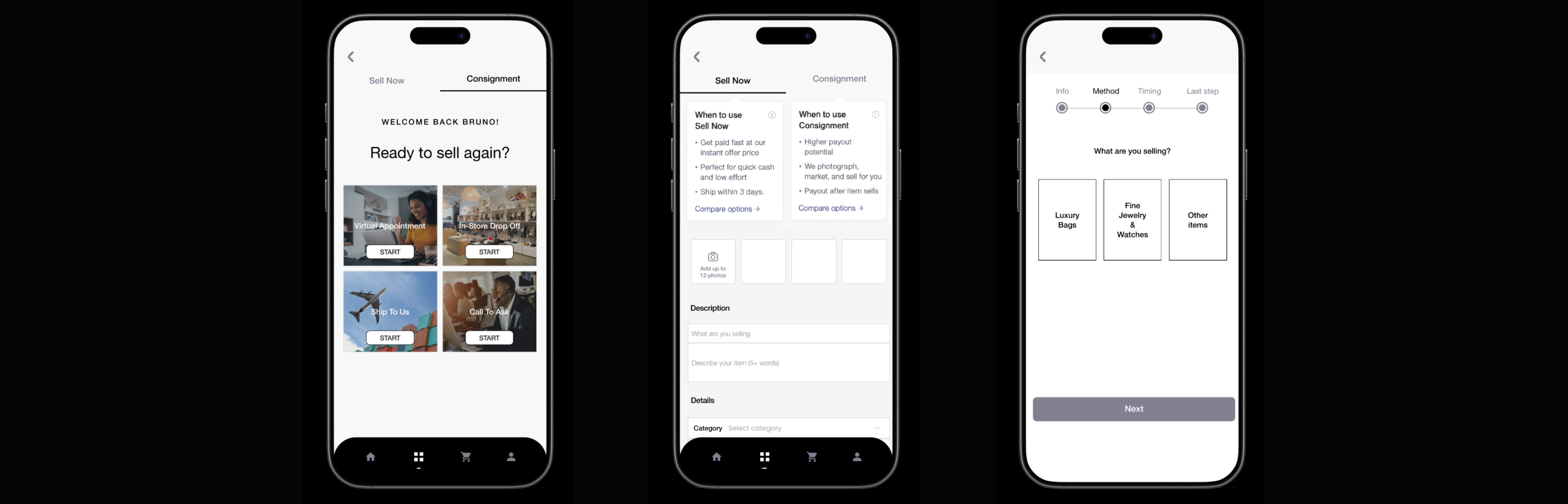
This flow focuses on helping sellers list high-value items in a clear and structured way. Instead of overwhelming them with one long form, the process is broken into simple steps — product details, pricing, condition, shipping, and review. The goal is to reduce friction while reinforcing trust and accuracy before publishing, especially since luxury resale relies heavily on transparency.

Seamless multi-item checkout with flexible payment options

This is the core shopping journey. It guides users from browsing to product detail, then into cart, shipping, payment, and final confirmation. Because these are high-value purchases, the flow emphasizes clarity at every step — visible totals, editable cart details, secure payment options, and a clear review screen before placing the order. The experience is designed to feel calm and intentional rather than rushed.

Authentication Service Flow

Trust is central to AltaPort, so this flow supports users who want authentication before selling or buying. Users can submit an item for verification, receive updates, and then proceed based on the result. The system accounts for approval, additional review, or rejection scenarios. The focus here is transparency and reassurance, making sure both buyers and sellers feel protected.

Product Customization Flow

For select pieces, this flow allows users to customize details like material or finish before purchasing. The experience centers around previewing changes clearly and confirming selections before adding to cart. The idea is to give users a sense of ownership and control while keeping the interaction simple and visually guided.

High Fidelity Wireframe

Part 5. Usability Test & iteration

USABILITY RESULTS

Usability testing validated AltaPort’s core flows, with 100% task completion and strong trust perception. Participants praised the premium feel, clear checkout process, and authentication system, while feedback highlighted opportunities to refine marketplace distinctions and pricing clarity in future iterations.

ITERATIONS

- Add visual/tab distinction between “Resale” and “International” marketplaces.
- Include guided tooltips for “Consignment vs Sell Now” during listing.
- Show live pricing changes in customization based on options.

Final Design

Final Prototype

Part 6. Key takeaways

Challenge

- Balancing different marketplace functions (retail, resale, customization, and authentication) within one seamless platform

- Building user trust, especially around authenticity and international sellers

- Prioritizing features for MVP without losing the value of the full ecosystem vision

- Designing flows that work for both buyers and sellers while keeping navigation intuitive
Lesson learned

- Balancing different marketplace functions (retail, resale, customization, and authentication) within one seamless platform

- Building user trust, especially around authenticity and international sellers

- Prioritizing features for MVP without losing the value of the full ecosystem vision

- Designing flows that work for both buyers and sellers while keeping navigation intuitive

- A clear and consistent design system speeds up prototyping and keeps the user experience coherent across diverse features

- Small design decisions (e.g., clear distinctions between resale vs. international markets) can strongly impact usability and trust

- Guided interactions (like tooltips or onboarding) help users understand complex processes such as consignment or authentication

- Simplifying complex flows into approachable steps improves both usability and adoption